
Industry Conversations
The Restaurant Intelligence Gap: Moving from Data to Action
A conversation with Kelly MacPherson.

Tanvir Bhangoo
September 16, 2026
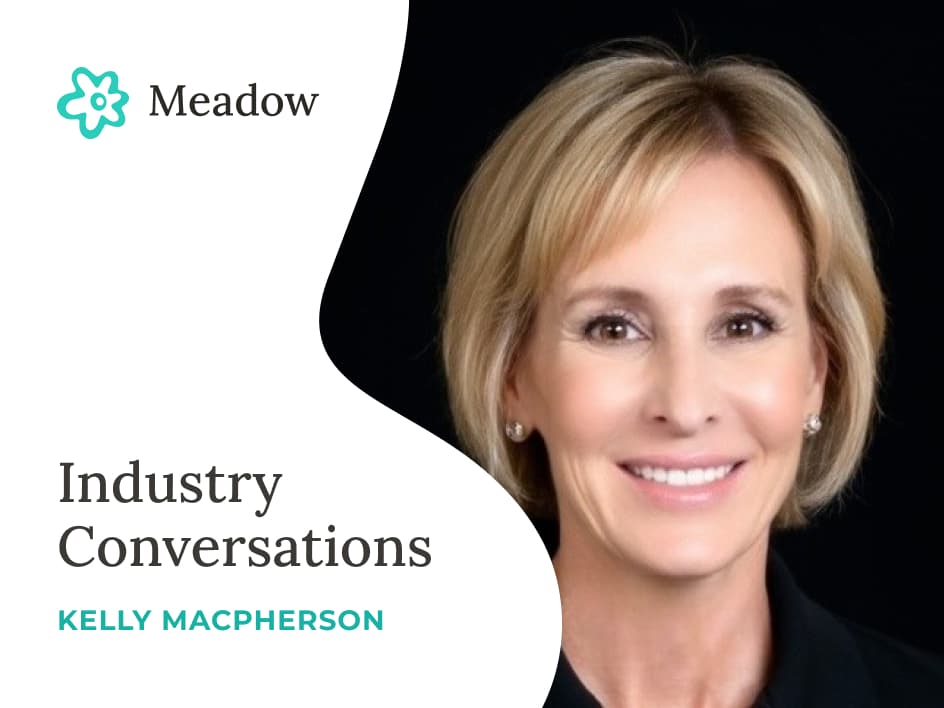

Kelly Ann MacPherson
Kelly Ann MacPherson is a technology transformation executive, independent board director, author, and President of KAM Advisory. With nearly three decades of executive leadership experience, she brings a practical perspective on how technology, data, AI, and digital transformation can create meaningful business advantage.
Kelly previously served as Chief Technology & Supply Chain Officer at Union Square Hospitality Group and Chief Information Officer at Restaurant Brands International, where she led the global technology organization supporting Burger King, Tim Hortons, and Popeyes.
Today, through KAM Advisory, Kelly works with hospitality and consumer brands, technology companies, executives, boards, and investors on technology strategy, investment, AI, data, and transformation. She also serves as an Independent Non-Executive Director of Applegreen, a Blackstone portfolio company.
Kelly is the author of Becoming Anyway and co-host of the Becoming Anyway podcast, where she explores leadership, reinvention, self-doubt, and what it means to keep moving before you feel ready.
The industry has invested heavily in analytics and data infrastructure over the last decade. Where do you think that investment has actually paid off, and where has it fallen short?
KM: It has paid off in access and visibility. Restaurant leaders can see far more of the business than they could ten years ago, often at a much more detailed level. We have better information on sales, labor, inventory, guests and digital behavior.
Where it has fallen short is turning that information into action. That is what led me to write Dashboards Are Dead. We have built increasingly sophisticated dashboards, but we still expect a busy restaurant leader to find the signal, interpret it and decide what to do.
We have largely solved the access problem. We have not solved the action problem.
There's a lot of talk about dashboards and reporting. In your experience, what's the gap between a team having access to data and a team actually doing something with it?
KM: A dashboard can tell you what happened. It does not necessarily tell you what matters, why it matters or what you should do next.
That gap is particularly important in restaurants, where managers are making decisions in real time. They do not have an hour to study multiple dashboards before a shift. They need to know what has changed, what they can influence and which action could still improve today's outcome.
The central argument in Dashboards Are Dead is that presenting the data cannot be the end product. The real measure of analytics is whether someone does something differently because of it.
There's a difference between analytics that tells you what happened and intelligence that tells you what to do about it right now. How important is that distinction, and do you think the industry has fully made that shift yet?
KM: It is a critical distinction, and I do not think the industry has fully made the shift. Traditional analytics is largely retrospective. It tells us what happened yesterday or last week. Intelligence recognizes what is happening now, puts it in context and helps someone determine what to do next.
We spent decades developing 1:1 marketing: the right message, to the right customer, at the right time, designed to drive an action. We should apply the same thinking inside the business. The future is 1:1 analytics, delivering the right intelligence to the right person while there is still time to affect the outcome.
Dashboards may remain as an underlying layer for exploration and validation, but they should no longer be the primary experience.
When you think about the role of an AI layer in restaurant operations — not just reporting, but something that is actually monitoring, identifying and driving action in real time — what does that look like practically? And what does it need to get right to earn the trust of operators?
KM: Practically, it means the business begins to monitor itself. Instead of a general manager logging into several systems, the intelligence comes to them: demand is different than expected, staffing is mismatched, inventory is at risk or a guest issue is emerging. It explains why the issue matters and recommends an action the manager can still take.
It also needs to be personal. A restaurant GM, regional leader, CFO and CEO should not receive the same dashboard with different filters. They have different time horizons, spans of control and decisions to make.
To earn trust, the intelligence must be relevant, accurate and transparent. It needs trusted data, consistent definitions and an understanding of what that individual can actually influence. It also has to know when not to recommend an action.
If it becomes another system to check or constantly produces noise, people will stop using it. Good intelligence should remove work, not create more of it.
Where do you think we are in the AI adoption curve for restaurants and retail, and what's your advice to operators who are trying to figure out where to start?
KM: We are still early. There is tremendous experimentation, but relatively few restaurant and retail companies have embedded AI into the way the business operates at scale.
The opportunity is much broader than analytics. AI can improve decisions, automate repetitive work, support employees, personalize the guest experience and redesign entire workflows.
My advice is to start with a business problem, not technology. Look for an area where the work is repetitive, slow or inconsistent, or where a better customer or employee experience could materially change the outcome. Choose something contained enough to test but important enough to matter. Start small in scope, but not small in relevance.
Then put it in front of real users, learn what works and measure the result. Prototype quickly, but earn the right to scale.
Why shouldn't a CEO, CFO, regional leader and restaurant GM all receive the same information?
KM: Because they do not have the same job and cannot take the same action. They have different time horizons, spans of control and decisions to make.
We understood this in marketing years ago. You would never send every customer the same message and call it personalization because you changed one filter. Analytics should work the same way.
Tell me about the work you're doing on this front at KAM Advisory and what kinds of projects you're working on.
KM: Through KAM Advisory, I work with executives, boards, investors and technology leaders on decisions that sit at the intersection of technology and the business. That includes AI and data strategy, major technology investments, transformation priorities and how the technology organization needs to evolve.
A growing part of the work is helping companies move from broad AI ambition to practical business applications. I help leadership teams identify where AI can create real value, define the experience they are trying to create and determine what must be true across data, technology, governance and the operating model to deliver it.
I also advise technology companies, helping them see their business through the customer's lens and shape what they build, how they position it and how they grow.
Separately, I am launching my book, Becoming Anyway, on October 1. It is a memoir about moving before you feel ready, leading while self-doubt follows and discovering you were enough all along. It is a different kind of project, but it comes from the same part of my experience: what it takes to lead through uncertainty, make difficult choices and keep moving when you do not have every answer.
What does a Tuesday morning fantasy-football recap get right that enterprise analytics often gets wrong?
KM: Fantasy football knows me. It does not just give me the scores. It tells me why I won or lost, which decision mattered and what I should think about next. It is hyperpersonalized to my team, my league and my choices. Meanwhile, we spend millions on enterprise analytics and still can't tell an individual manager what to do next.
What should a restaurant GM receive at 7 a.m. that they are not receiving today?
KM: Not twenty KPIs.
Tell the GM what could affect today: demand is different than expected, staffing is mismatched, inventory is at risk or a guest issue is emerging. Give them the context and an action they can still take.
Yesterday's results matter, but the real value is helping them change today's outcome.
Do companies need to fix all their data before they begin?
KM: No. If you wait to fix everything, you will never start.
Pick one meaningful decision and work backward. Who makes it? What do they need to know? When do they need to know it? What action are you trying to drive? Then make that specific data path good enough, build the experience and learn from it.
Start small in scope, but not small in relevance.
How do you distinguish a meaningful AI use case from an interesting demonstration?
KM: Start by asking who will do something differently because of it and whether you can measure the outcome.
A useful first case should address a decision that occurs often enough to matter, where better timing or context could change the result. It should be contained enough to deliver, but important enough that people notice if it works.
If no one does anything differently, it was an interesting demonstration, not a transformation.
See what an AI co-manager would find in your stores.
We'll walk your operation through where Meadow drives measurable revenue, margin, and execution gains.